

- Home page
- Company
- Prodotti
- Ruote EPM
- Raduni Owners Meeting
- 2019 14th Magni Owners Meeting
- 2018 13th Magni Owners Meeting
- 2017 12th Magni Owners Meeting
- 2016 11th Magni Owners Meeting
- 2016 Magni Art Project
- 2015 10th Magni Owners Meeting
- 2013 9th Magni Owners Meeting
- 2012 8th Magni Owners Meeting
- 2012 Quail Motorcycle
- 2011 7th Magni Owners Meeting
- 2011 Bol d'Or Magny Cours
- 2010 6th Magni Owners Meeting
- 2009 5th Magni Owners Meeting
- 2008 4th Magni Owners Meeting
- 2007 3rd Magni Owners Meeting
- 2006 2nd Magni Owners Meeting
- 2005 1st Magni Owners Meeting
- Magni Owners
- News
- Contatti


Arturo Magni: 80 anni di passione pura
1925 2005: Arturo Magni compie ottanta anni: ottant’anni di passione pura, dedicati al mondo delle motociclette.
Nasce ad Usmate Velate (Milano) il 24 settembre 1925.
La sua storia nel mondo delle due ruote inizia nel 1947, quando la Gilera decide di partecipare al campionato mondiale classe 500cc: Arturo Magni viene assunto con lo specifico incarico di assistere l’Ing. Pietro Remor nell’assemblaggio del nuovo motore a quattro cilindri, che porterà la Gilera alla vittoria di sei titoli mondiali nella classe 500 con i piloti Duke, Masetti e Liberati.
Nel 1949 il Conte Domenico Agusta affida l’incarico di disegnare il primo 4 cilindri MV Agusta da corsa all’Ing. Remor; quest’ultimo richiede la collaborazione di Magni, che lo raggiunge a Cascina Costa l’anno seguente.
Magni diventa capo meccanico e in seguito direttore del reparto corse sotto la guida del Conte Agusta; dirige piloti come Agostini, Ubbiali, Surtees,Hailwood, Read, Provini, Sandford, e sotto la sua guida MV vince ben 75 titoli mondiali (37 marca e 38 piloti).
Quando la MV Agusta si ritira dalle competizioni nel 1976, Arturo Magni fonda la ditta Magni, dedicandosi inizialmente alle trasformazioni delle quattro cilindri 750cc MV Agusta: progetta un kit per la modifica da cardano a catena, poi quello per la maggiorazione a 861cc, fino a realizzare la ciclistica completa.
Nel 1980 inizia la produzione di motociclette con il marchio Magni, inizialmente con motori Honda 900 4 cilindri, poi i boxer BMW, i bicilindrici Moto Guzzi, e infine, per gli ultimi modelli, il 4 cilindri Suzuki.
“Mi ritengo un uomo molto fortunato”, ammette Magni, “dopo aver passato oltre un quarto di secolo a lavorare sulle motociclette più esclusive e titolate al mondo, ho avuto la possibilità di realizzare delle motociclette con il mio nome. Il restauro delle vecchie MV mi tiene legato al passato, la realizzazione dei nuovi modelli e’ il legame del passato con il futuro. Molti clienti diventano buoni amici e questo mi fa sentire attorniato da una grande famiglia che cresce ogni volta che viene realizzato un nuovo modello”
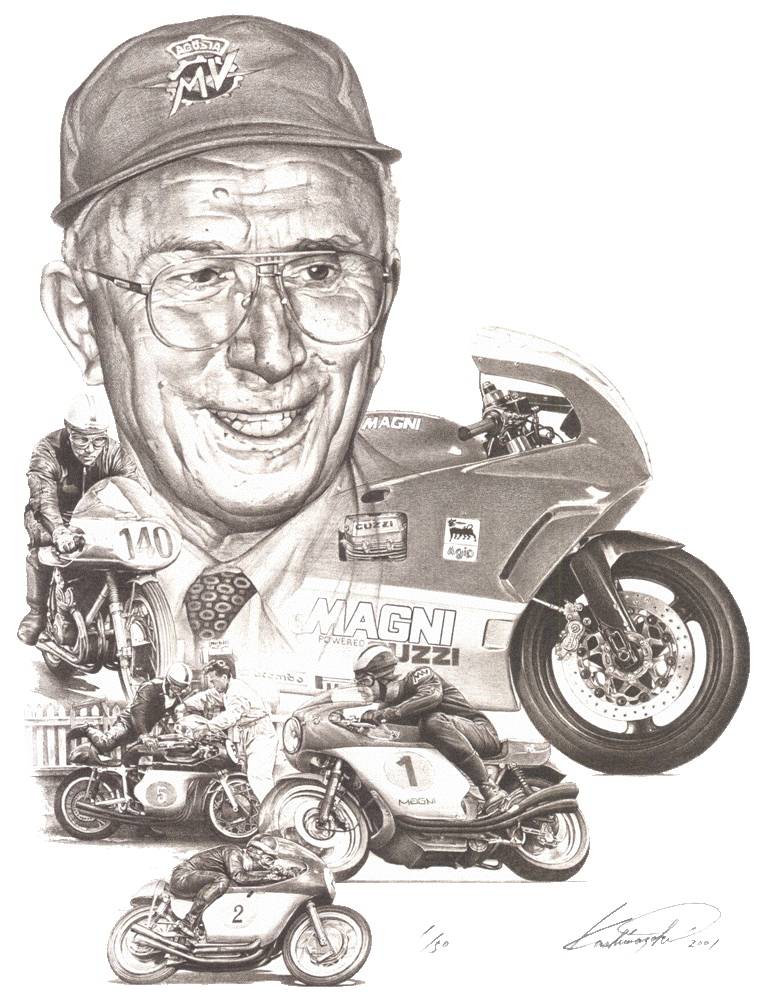
Arturo Magni: 80 anni di passione pura
1925 – 2005: Arturo Magni 80-year-old-anniversary, 80 years of motorcycle passion.
He was born in Usmate Velate (Milano), September, 24 1925.
He started his career in the motorcycle world in 1947, when Gilera factory decided to come back into 500cc GP racing: Arturo Magni was called to assemble the new four-cylinder engine designed by Pietro Remor; this engine made Gilera win the 500 world title six times with the pilots Duke, Masetti and Liberati.
In 1949 Count Domenico Agusta entrusted Remor to design the first MV Agusta four-cylinder race engine and Magni reached him to Cascina Costa in 1950 as chief mechanic.
Later he became the racing department manager under the guide lines of Count Agusta; he directed pilots like Agostini, Ubbiali, Surtees, Hailwood, Read, Provini, Sandford, Hocking and under his racing management MV won75 World Championships.
He worked for MV Agusta till the company retired from GP races in 1976, then he set up his own firm with his two sons in Samarate. At the beginning they produced special parts for shaft-drive four-cylinder MV Agusta 750 street bikes, such as chain-drive conversions, big bore kits, frame kit.
In 1980 the production of Magni motorcycles started, initially with Honda Bol d’Or 900cc engine, then with BMW boxer engine, Moto Guzzi twin-cylinder and finally 4 cylinder Suzuki engines.
'I think I am an extremely lucky man,' admits Arturo Magni. 'I spent more than a quarter of a century working on the most exclusive and successful racing motorcycles all over the world. And then I had the privilege, thanks to my sons, to begin a new career as a specialist streetbike manufacturer. The restoration work that our firm regularly carries out on MVs and other vintage bikes keeps me in touch with the past. On the other hand, Magni looks ahead to the future too, with a succession of new road models incorporating the latest technology and latest components. Many customers become good friends, and it makes me feel as in a big family that grows every time we complete another bike.'